
 EN
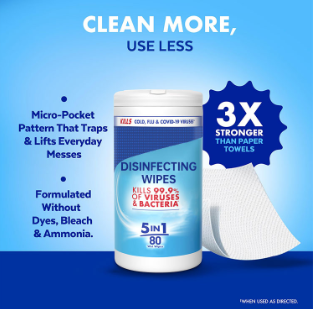
How Disinfectant Wipes Inactivate Key Pathogens
Mechanism of Action: How Active Ingredients Disrupt Viruses, Bacteria, and Enveloped Pathogens
Disinfectant wipes inactivate pathogens primarily by disrupting microbial cell walls, viral envelopes, and critical structural proteins. Most rely on quaternary ammonium compounds (quats), alcohol (ethanol or isopropyl alcohol), or accelerated hydrogen peroxide—each with a distinct biochemical mode of action. Quats bind to negatively charged bacterial membranes, causing cytoplasmic leakage and rapid cell death. Alcohol denatures proteins and dissolves lipid envelopes, making it highly effective against enveloped viruses like SARS-CoV-2 and influenza. Hydrogen peroxide generates reactive oxygen species that oxidize lipids, proteins, and nucleic acids across all pathogen types.
Because enveloped viruses depend on a fragile lipid bilayer for infectivity, they are generally more susceptible to alcohol and quat-based wipes than non-enveloped viruses such as norovirus—which lack this outer layer and often require longer dwell times or stronger oxidizers. Effectiveness is maximized on clean, non-porous surfaces where the active ingredient remains in sustained contact with the pathogen. Crucially, wiping adds mechanical friction that removes soil and biofilm while delivering disinfectant—combining physical removal with chemical inactivation to reduce viable pathogens on high-touch objects.
EPA-Registered Efficacy: What '99.9% Kill' Means for SARS-CoV-2, Influenza, E. coli, and Staph
EPA registration confirms that a disinfectant wipe’s label claims are backed by standardized laboratory testing under real-world use conditions—including specific substrate type, contact time, and soiling level. A “99.9% kill” claim reflects a 3-log10 reduction—lowering a microbial load from 1,000,000 to 1,000 colony-forming units—not sterility. For SARS-CoV-2 and influenza, alcohol-based wipes typically achieve this reduction within 30 seconds to 2 minutes; quats and hydrogen peroxide may require up to 4 minutes depending on formulation and pathogen resilience.
E. coli, a Gram-negative bacterium, is reliably inactivated by quats and hydrogen peroxide, but surface pre-cleaning can significantly influence required contact time. Staphylococcus aureus, including methicillin-resistant (MRSA) strains, often demands full label dwell time due to protective proteins and biofilm formation. Importantly, EPA registration is pathogen-specific: not every wipe is approved for all organisms. Users must consult the product label for exact contact times and validated target pathogens—and apply the wipe only as directed, ensuring the surface remains wet for the full duration.
Maximizing Disinfectant Wipes’ Effectiveness Through Proper Use
Dwell Time Essentials: Why Contact Duration (30 Sec–4 Min) Determines Real-World Success
Disinfectant wipes only deliver their labeled efficacy if the active liquid remains visibly wet on the surface for the full EPA-registered contact time—typically ranging from 30 seconds to 4 minutes. Premature drying drastically reduces pathogen inactivation. Many users wipe once and move on, unknowingly compromising effectiveness. As emphasized by CDC guidance, disinfectants must remain wet for the entire stated dwell time to ensure reliable microbial kill.
For large surfaces, one wipe often cannot maintain saturation long enough—requiring multiple wipes applied sequentially to keep the area wet. Longer dwell times (e.g., 4 minutes) commonly apply to harder-to-kill organisms like MRSA and norovirus; shorter durations (e.g., 30 seconds) may suffice for enveloped viruses. Staff should match dwell time to risk context—reading labels carefully and verifying that surfaces stay wet throughout. After application, no rinsing or wiping dry is needed unless specified; the surface should air-dry naturally after the contact period.
Surface Compatibility and Pre-Cleaning: Optimizing Performance on High-Touch Non-Porous Surfaces
Disinfectant wipes are designed exclusively for hard, non-porous surfaces—such as stainless steel, sealed plastic, glass, and laminated touchscreens. On porous materials like fabric, unfinished wood, or cracked silicone, liquid absorption prevents consistent contact and invalidates kill claims.
Pre-cleaning is essential when visible soil, grease, or bodily fluids are present. Disinfectants cannot penetrate heavy organic matter, and using a wipe on a soiled surface risks smearing contaminants rather than eliminating them. The recommended sequence is: first remove visible soil with a cleaning wipe or detergent solution, then apply a fresh disinfectant wipe and maintain full dwell time.
High-touch non-porous surfaces—including door handles, light switches, phones, and keyboards—require pre-cleaning only when visibly soiled. On lightly soiled surfaces, a single disinfectant wipe can be effective—if it delivers sufficient liquid to keep the surface wet for the full contact time. Never stretch one wipe across multiple surfaces: discard it as soon as it appears dry, soiled, or less saturated, and use a new wipe for each task.
Why Disinfectant Wipes Reduce Cross-Contamination More Reliably Than Reusable Alternatives
Single-Use Advantage: Eliminating Residue Transfer on Phones, Keyboards, and Door Handles
Disinfectant wipes offer a decisive hygiene advantage over reusable cloths: each wipe delivers a pre-saturated, consistent dose of active disinfectant and is discarded after a single use—eliminating cross-contamination via residue transfer. On phones, keyboards, and door handles—surfaces prone to accumulating oils, skin cells, and microbes—this “one wipe, one surface, one direction” technique physically removes contaminants instead of redistributing them.
Reusable rags and mops pose well-documented bioburden risks: they pick up pathogens during use and can reintroduce them through contaminated buckets, repeated passes, or inadequate laundering. In contrast, single-use wipes remove both soil and microbes from the environment at the point of use. Real-world hygiene audits in high-traffic clinical and office settings found that surfaces cleaned with single-use disinfectant wipes exceeded contamination thresholds less than 8% of the time—compared with nearly 19% for reusable cloth protocols (2023). This makes disinfectant wipes especially reliable for busy desks, entryways, and patient-facing equipment.
Regulatory Assurance: How EPA Certification Validates Disinfectant Wipes’ Claims
Under the Federal Insecticide, Fungicide, and Rodenticide Act (FIFRA), disinfectant wipes must undergo EPA registration—not just ingredient review—to legally make antimicrobial claims. Registration evaluates the entire product system: formula, wipe substrate, packaging, and intended use conditions.
From Laboratory Validation to Product Label: MRSA, Norovirus, and Enveloped Virus Testing Protocols
EPA efficacy testing assesses the complete marketed wipe against specific pathogens—including MRSA, norovirus, and enveloped viruses like SARS-CoV-2—using standardized methods such as ASTM E3363 (recommended in 2024 for pre-saturated wipes on hard, non-porous surfaces). Unlike generic active-ingredient studies, EPA validation requires testing the final product under realistic soiling and application conditions.
Label claims—including “99.9% kill,” contact time, and pathogen coverage—must align precisely with the registered formulation and test data. The EPA registration number printed on the label serves as a verifiable link to the exact product version that passed validation. This ensures buyers can confirm that the wipe—not just its chemistry—meets pathogen-specific performance standards.
Frequently Asked Questions
Do disinfectant wipes kill all pathogens?
No, disinfectant wipes are most effective against specific pathogens listed on their label. Users should check the EPA registration details to confirm coverage for particular organisms.
Why is dwell time important for disinfectant wipes?
Dwell time ensures the surface remains wet for the full EPA-registered duration, allowing the active ingredient to inactivate microbes effectively. Premature drying reduces efficacy.
Can disinfectant wipes be used on porous surfaces?
No, disinfectant wipes are designed for hard, non-porous surfaces like plastic or glass. Porous surfaces absorb liquid and compromise kill claims.
How should disinfectant wipes be used on soiled surfaces?
Pre-clean visible soil with a cleaning wipe or solution before applying a disinfectant wipe. This ensures sufficient contact between the active ingredient and the surface.
Are reusable cloths as effective as single-use disinfectant wipes?
No, reusable cloths risk cross-contamination, as they can reintroduce pathogens from previous use. Single-use wipes reduce this risk by being discarded after each application.
Table of Contents
- How Disinfectant Wipes Inactivate Key Pathogens
- Maximizing Disinfectant Wipes’ Effectiveness Through Proper Use
- Why Disinfectant Wipes Reduce Cross-Contamination More Reliably Than Reusable Alternatives
- Regulatory Assurance: How EPA Certification Validates Disinfectant Wipes’ Claims
- Frequently Asked Questions